Title & variants
Primary title, historical titles, translations, attribution changes as research progresses.
A catalogue raisonné project runs for ten, twenty, sometimes thirty years. More than the artwork itself, what matters is the longevity of the database — that your data remains yours, that the software outlives its editor, that the scholarly work can be passed on.
In this page
— Concrete evidence
Below is an excerpt from the Catalogue raisonné of Louis Floutier (1882-1936), a Basque painter whose œuvre is documented page after page by Mary-Ann Prunet, editor. First edition published in the Basque Country in June 2017, second edition released on 1 May 2026. Layout and PDF generation happen directly inside CollectiveAccess, through the BookCreator plugin we developed. Flip through the excerpt below.
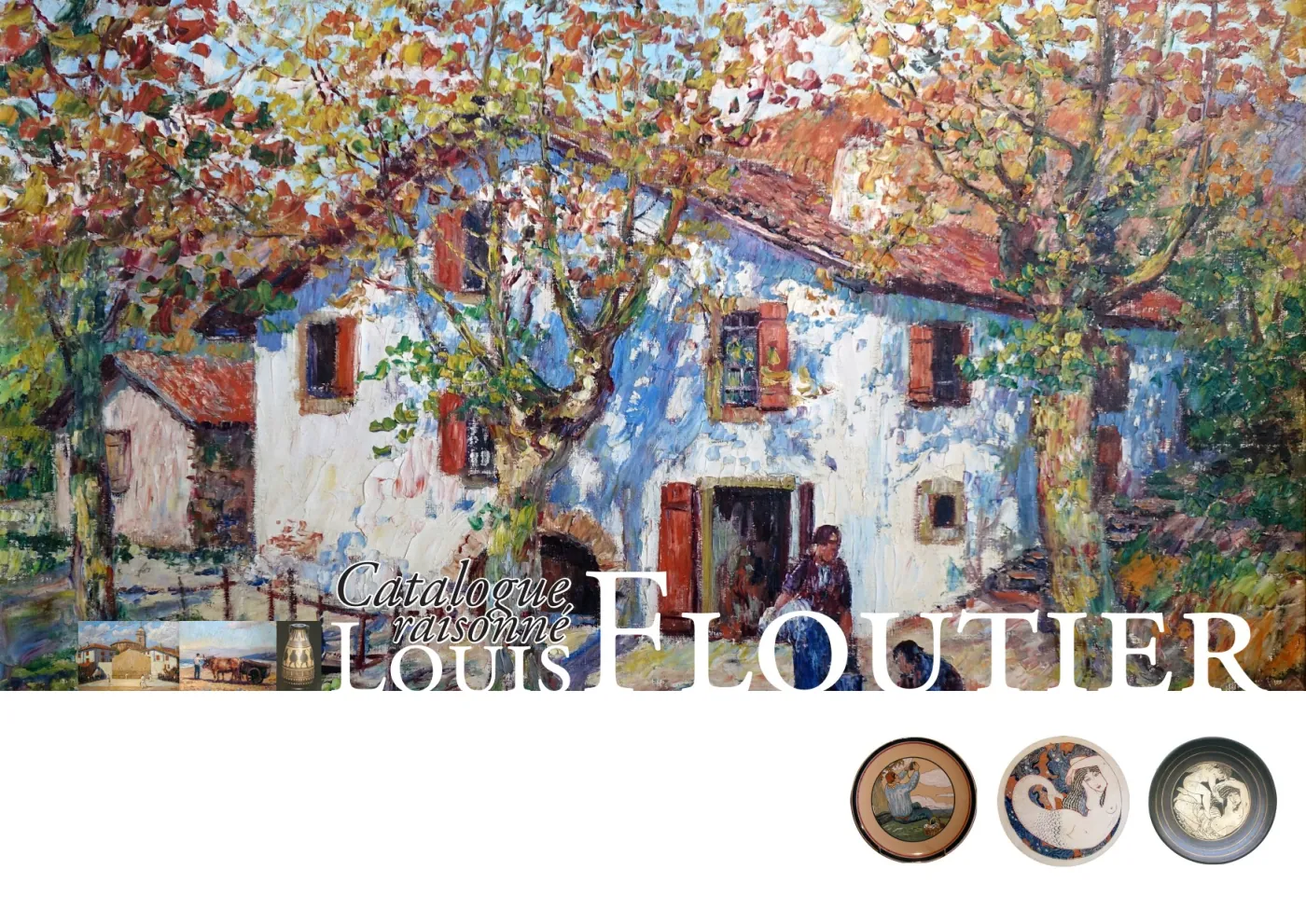
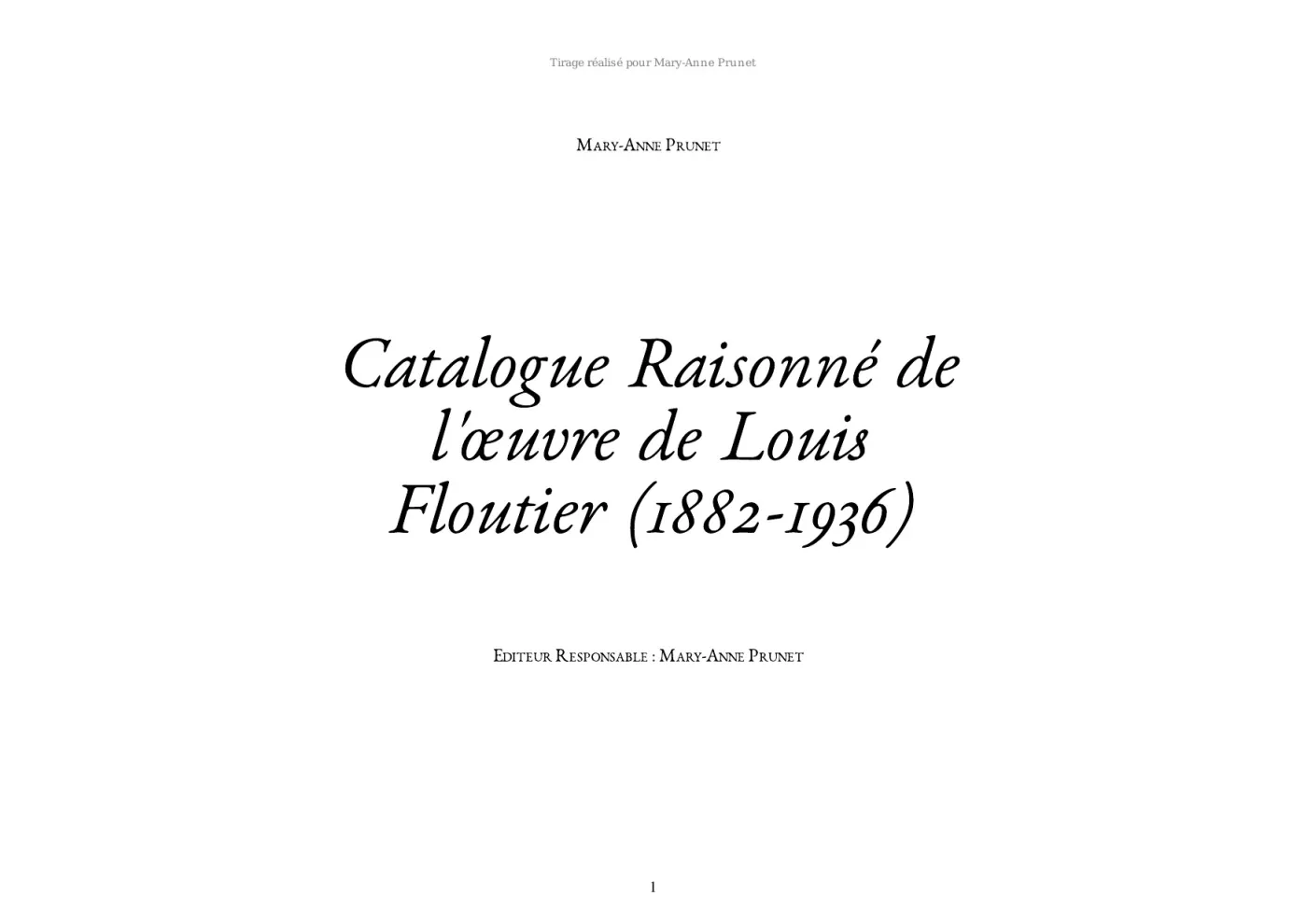
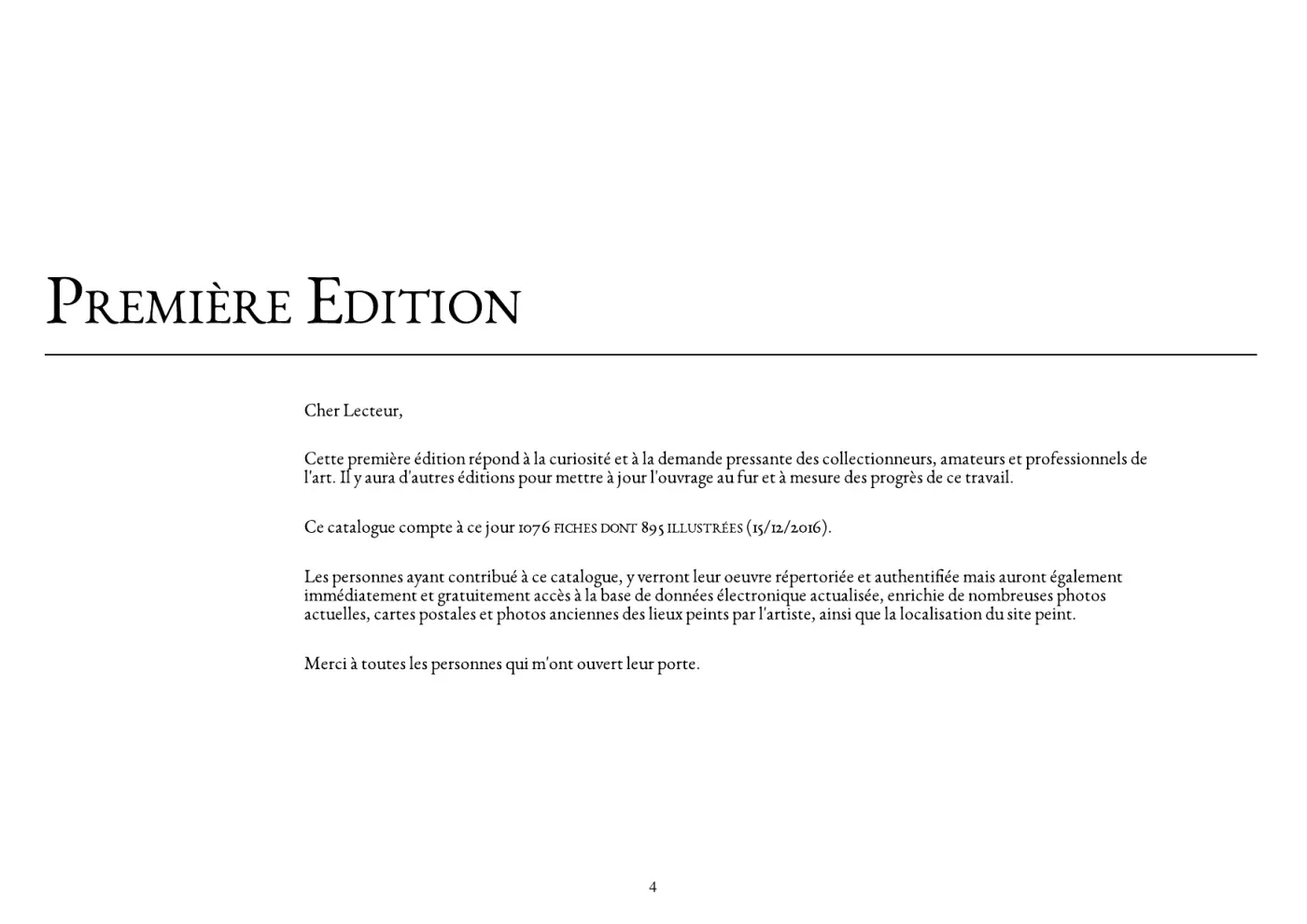
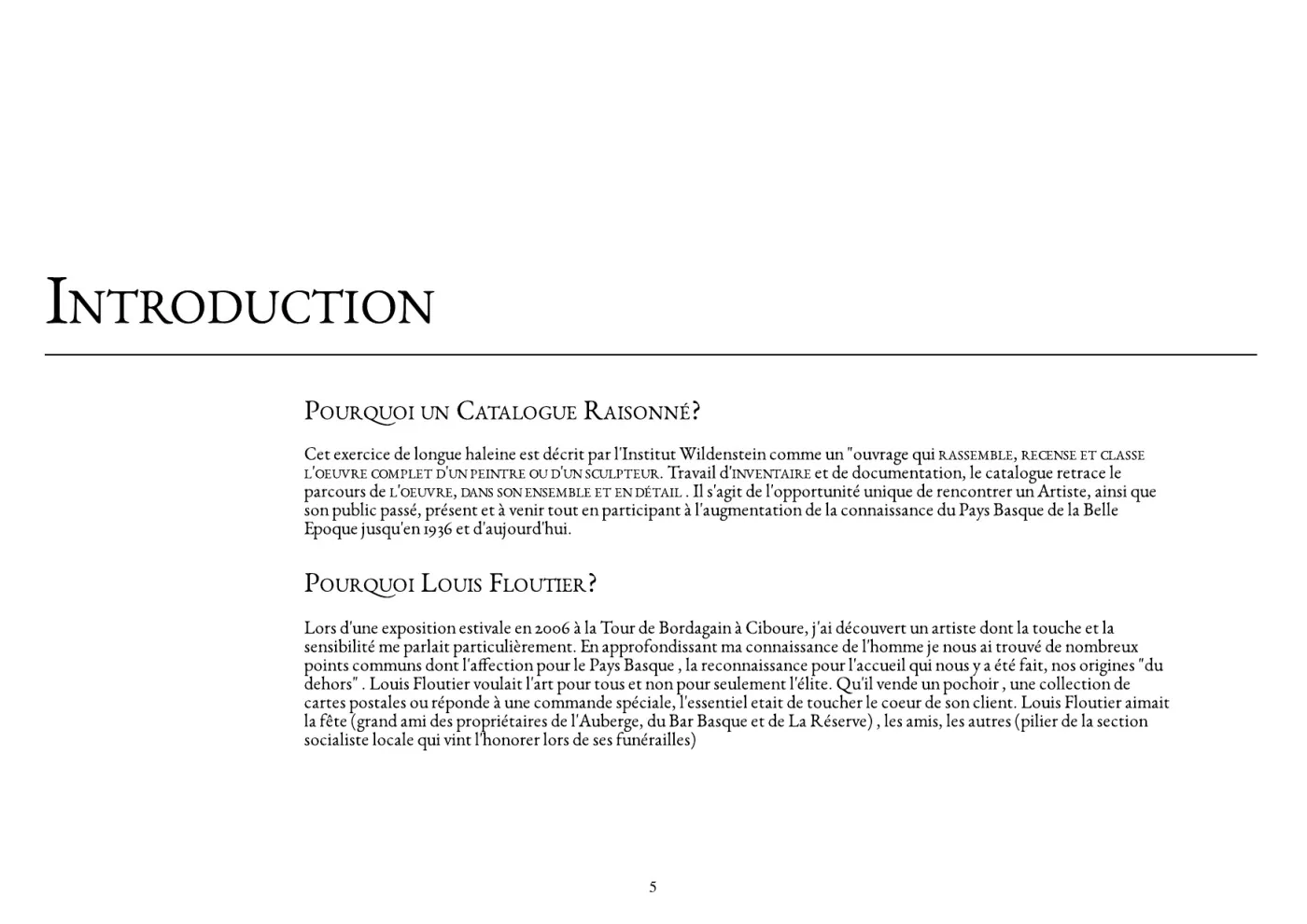
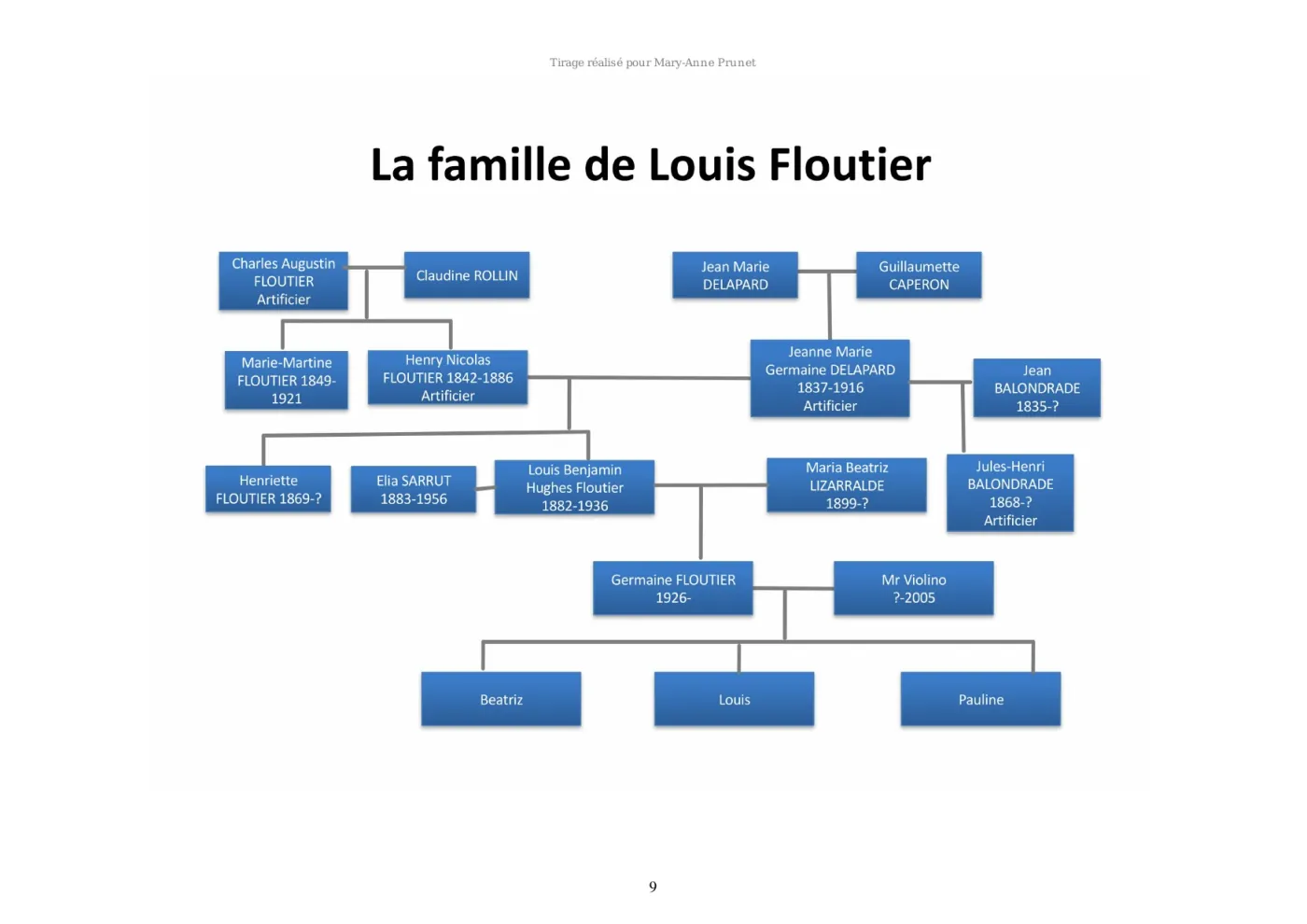
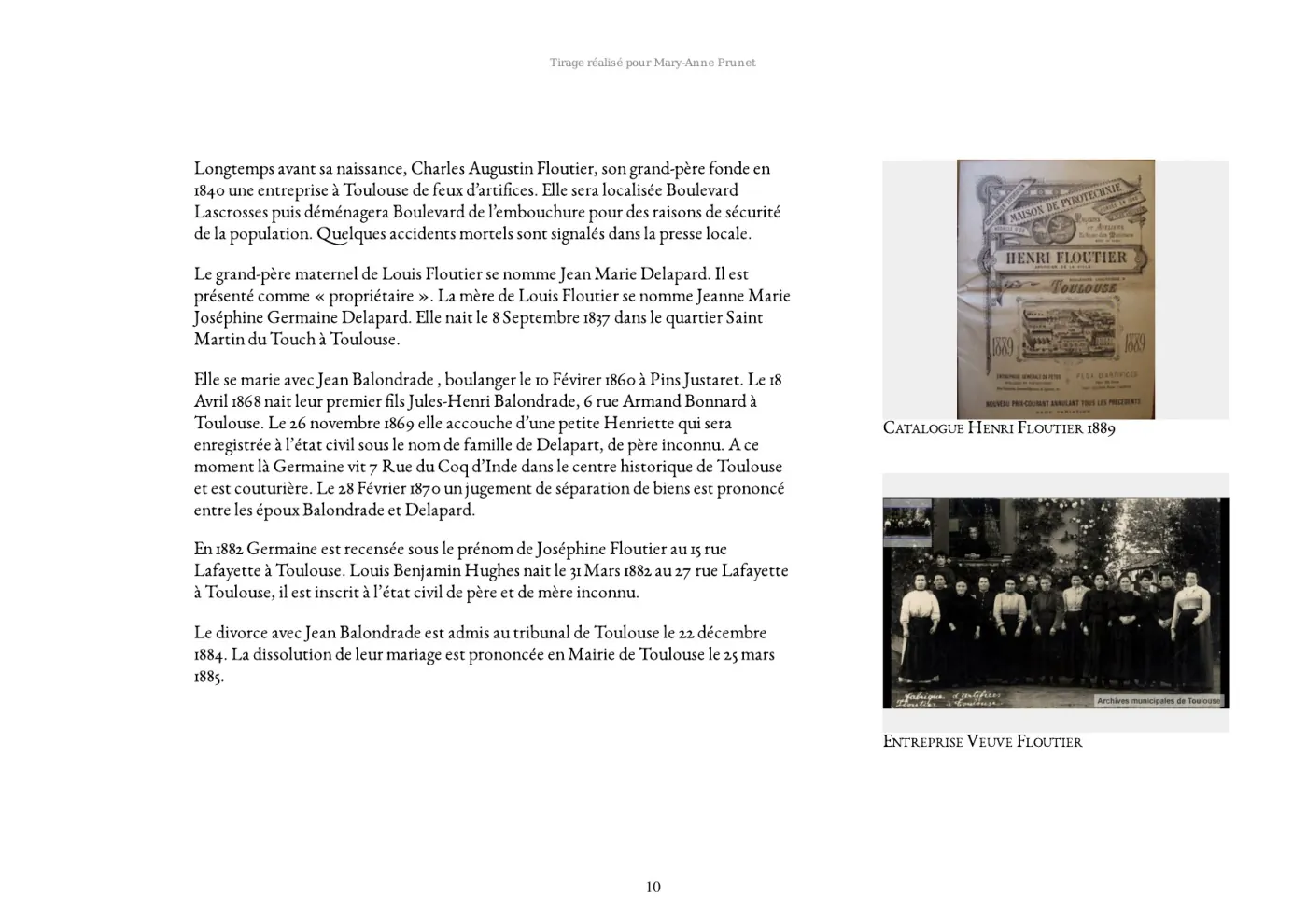
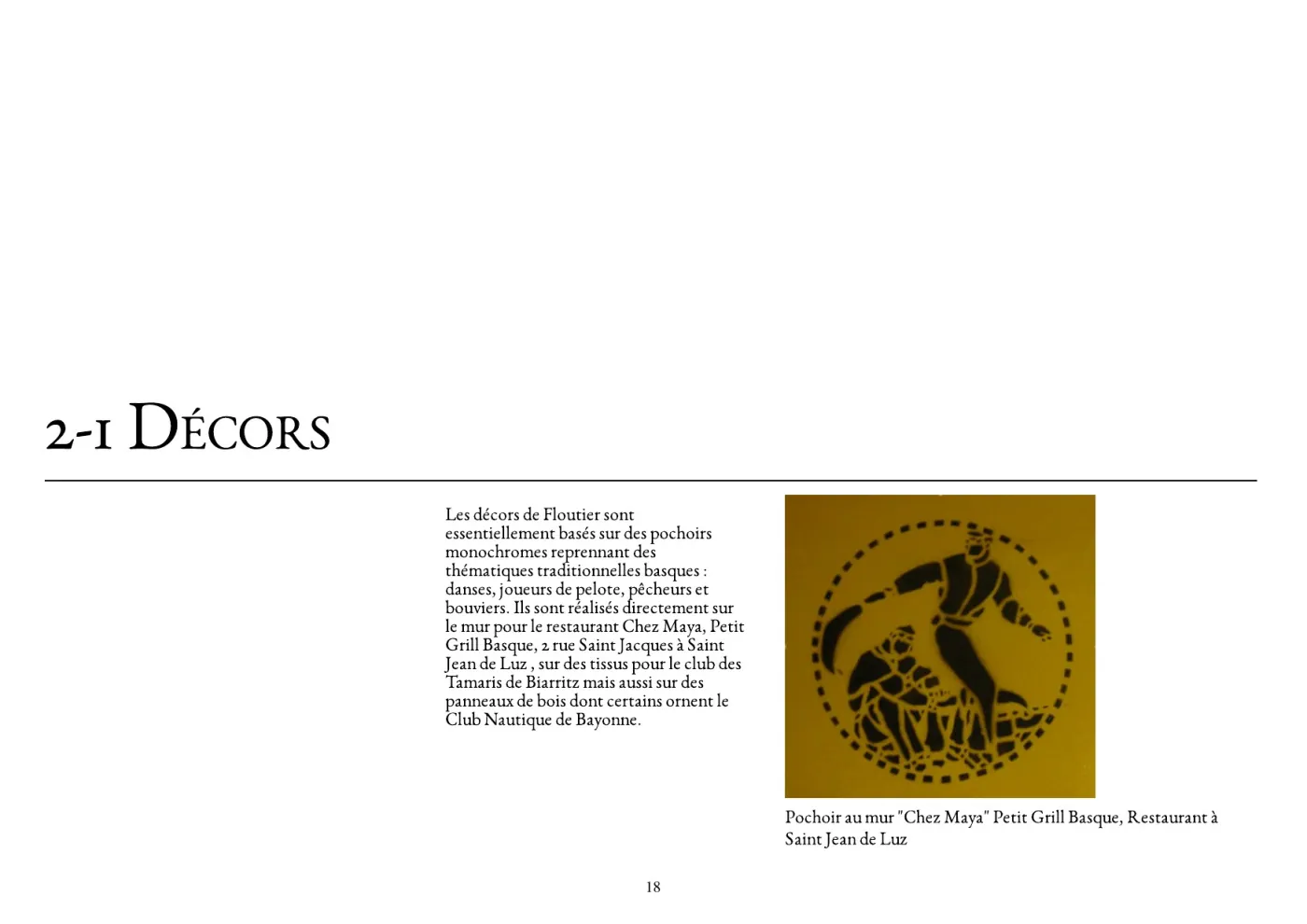
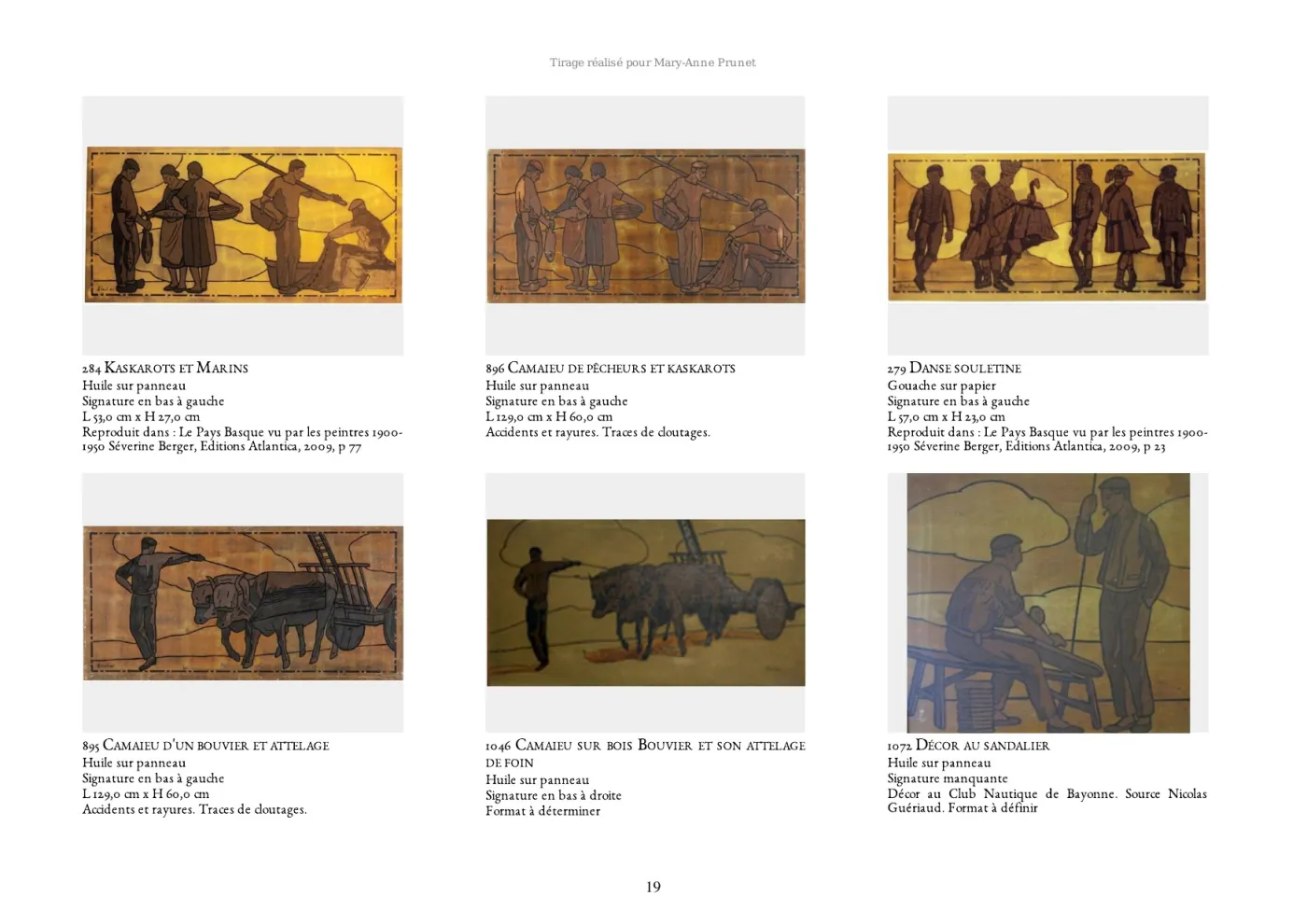
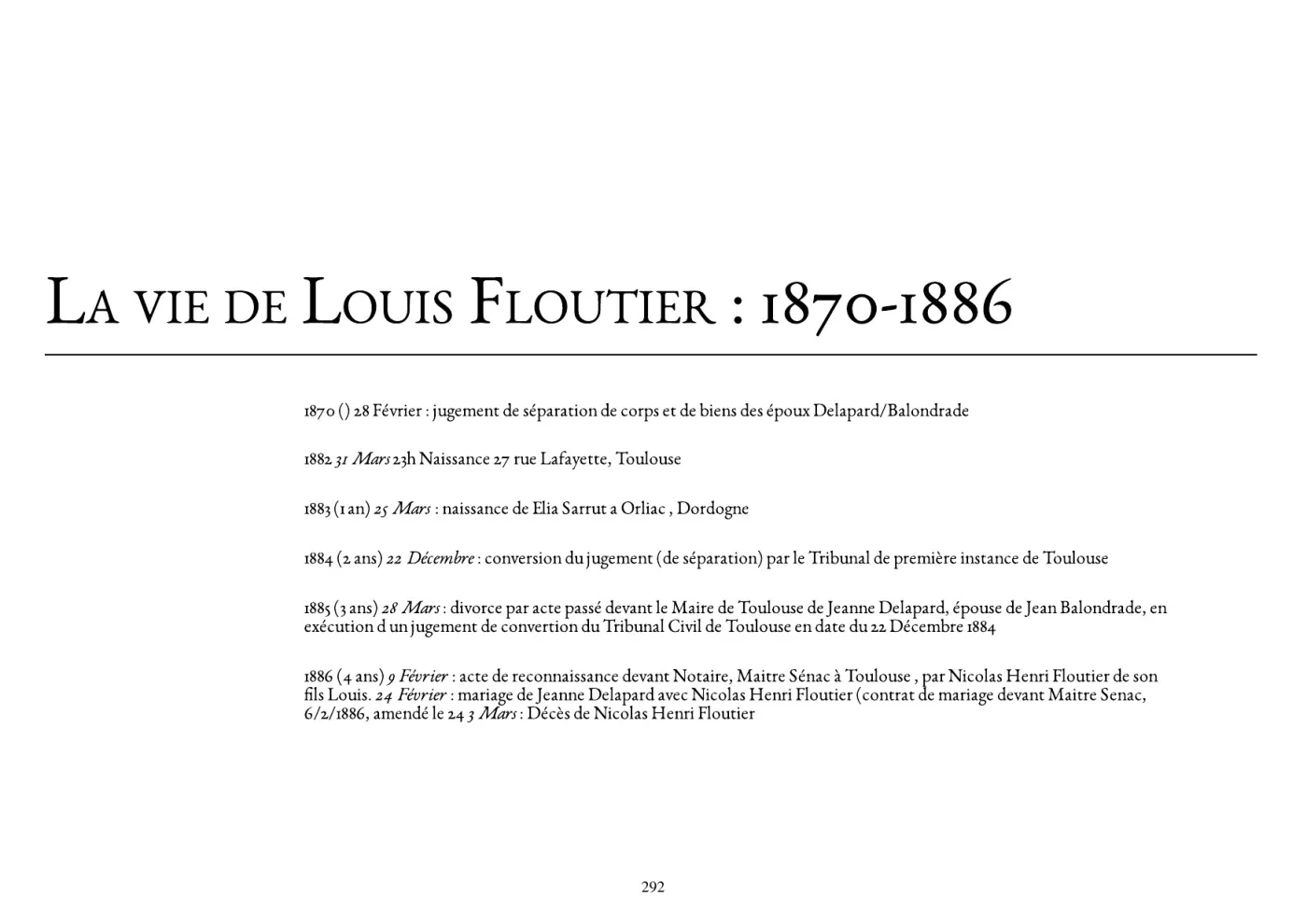
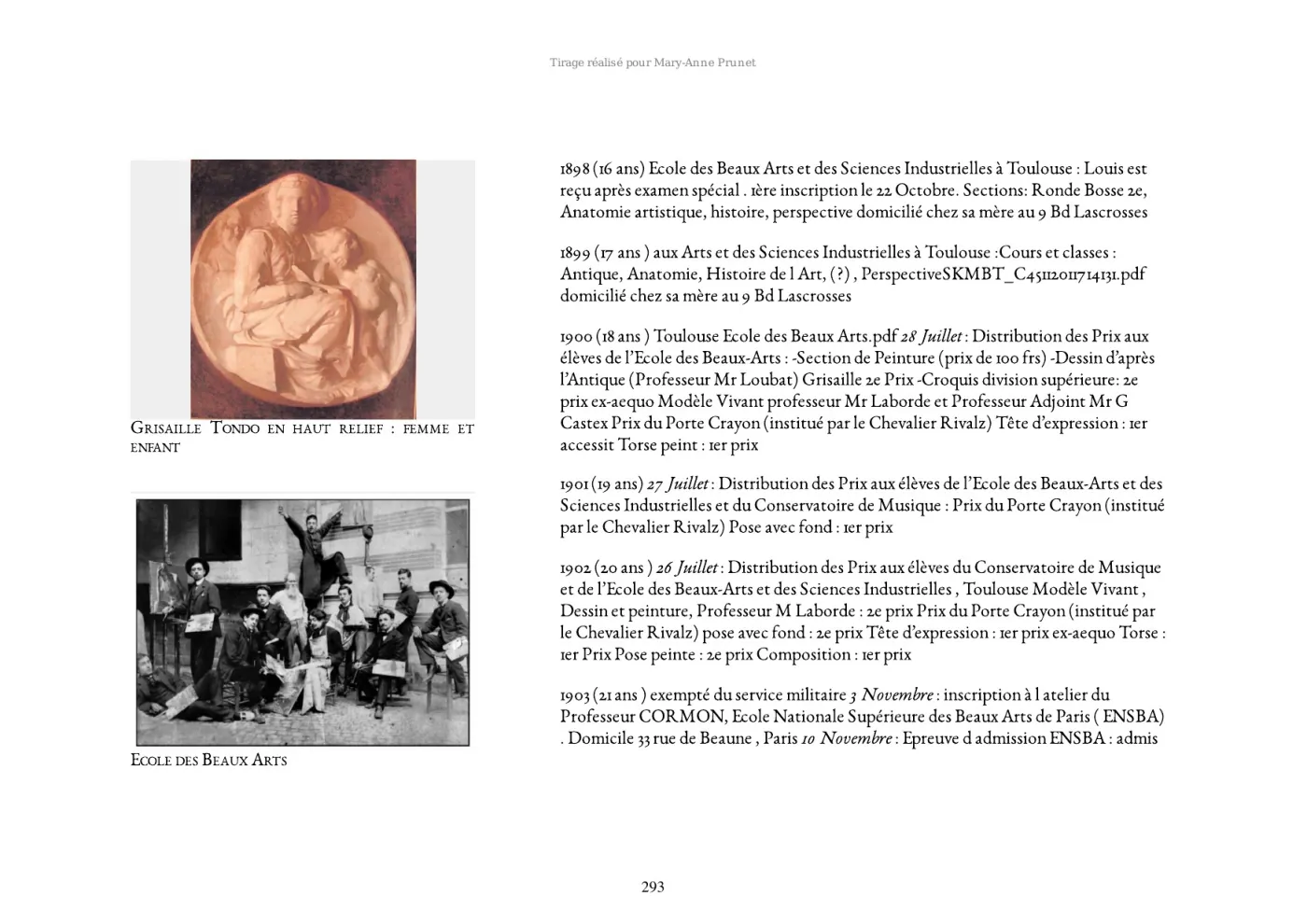
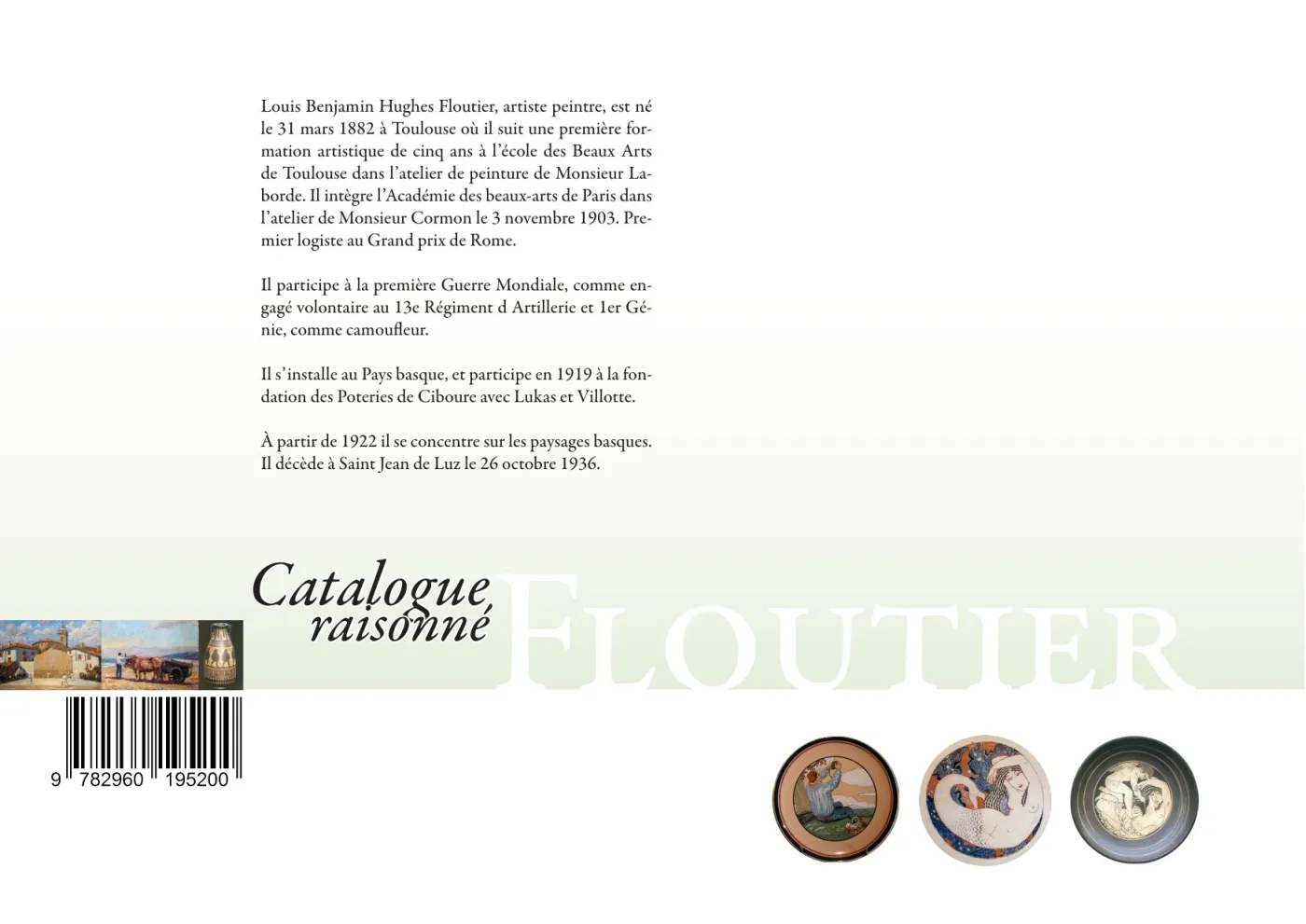
Catalogue raisonné Louis Floutier — 16-page excerpt of a 300-page volume. © Mary-Ann Prunet, floutier.com. Layout and PDF export: CollectiveAccess + BookCreator plugin (idéesculture).
Download PDF excerpt (16 pages) 10 MB ↓The most complete inventory possible of the known works of an artist, in their scientific and juridical status.
A catalogue raisonné is the most complete annotated inventory of the works of an artist — painter, sculptor, printmaker, photographer or contemporary practitioner. Beyond the inventory function, it carries a critical and juridical dimension: it attests, over the long run, what belongs to a creator's œuvre — and what does not. The term, originally French, is now the international standard in art-historical scholarship (Wildenstein Plattner Institute, NYPL, MoMA, Tate).
Long the domain of printed scholarship, the catalogue raisonné now exists in digital form — alive, indexed, interconnected with international databases. The two formats often coexist: digital for the market and research, print for bibliographic permanence.
Primary title, historical titles, translations, attribution changes as research progresses.
Painting, drawing, print, sculpture, photography, video, installation. Materials, supports, dimensions.
Certain date, hypothetical dating, period of production, biographical anchor.
Studio of origin, successive dealers, private collections, auction sales, loans, thefts and restitutions.
Exhibitions, bibliography, citations in the specialised press, articles, monographs, theses.
From the initial scope to continuous publication. At each stage, the database grows with the project.
Known works, attributed works, rejected works. The catalogue raisonné carries a juridical function: what is inscribed, what is removed, on which criteria.
Public and private archives, past exhibitions, Sotheby's / Christie's / Artcurial sales, specialised press, correspondence, critical reception.
Condition reports, accurate measurements, HD photography, scientific analyses where helpful (X-rays, infrared, dendrochronology).
Scientific expertise, validation by the artist's committee or heirs, certificates. The database records the decision and its context.
Material description, biography of the work, critical reception, bibliographic references. Dublin Core, DACS or CDWA model depending on scholarly tradition.
Public website or restricted consultation. Continuous updates: new attributions, de-attributions, recent sales, upcoming exhibitions.
Four structural arguments for a project that unfolds over several decades.
A typical catalogue raisonné project runs for ten to twenty years. The question isn't only « is the editor solid today? » but « will they still be here in fifteen years? ». With open-source software like CollectiveAccess, the code stays publicly available: if the provider disappears, the codebase can be picked up by another. Le Journal des Arts (March 2026) identified this point as the main threat to the digital catalogue raisonné.
An artist's foundation or family of rights-holders builds a documentary patrimony. That patrimony doesn't belong in a cloud-only editor's silo. CollectiveAccess installs on the infrastructure of your choice: your own server, your sovereign French host, or our infrastructure if you ask us.
A catalogue raisonné scientific committee can include fifteen people: historians, lawyers, photographer, conservator, doctoral candidates, consulting dealer. With per-user SaaS billing, that headcount becomes a constraint. With CollectiveAccess, your access rules drive the contract — not the other way around.
ULAN, AAT, TGN (Getty vocabularies), Wikidata, OAI-PMH, RDF, Linked Open Data: CollectiveAccess speaks these standards natively. Your catalogue entry talks to the international reference databases without custom integration.
An open-source software suite used by around a hundred cultural institutions worldwide. Its structure fits the catalogue raisonné natively.
Objects, lots, collections, entities (artist, dealer, expert), places, events (exhibitions, sales), occurrences (citations, articles), loans, movements, sets. A catalogue raisonné is rarely flat — CollectiveAccess fits its actual shape.
Extended date recognition: « circa 1912 », « 19th century », « before 1850 », « between 1900 and 1905 ». Essential when the date is uncertain.
High-resolution photographs with zoom and rotation, streaming audio and video, in-browser 3D viewer. Essential for contemporary artists (installations, performances).
Connectors to Getty (ULAN, AAT, TGN), Wikipedia / Wikidata, Z39.50 (BnF, SUDOC). Your catalogue's terms stay aligned with international references.
Imports from XLSX, CSV, XML, MARC, FileMaker, MySQL, other CollectiveAccess instances. Exports OAI-PMH, RDF, EAD, Dublin Core, PDF. A natural bridge to print publication.
Providence for private scholarly cataloguing, Pawtucket for the public consultation site. Two interfaces, one database — coherence is mechanical.
Five phases designed for the life of the project — from framing to fifteen years of maintenance.
Reading the existing corpus, identifying the scientific committee, scope, schedule, metadata model, publication modalities.
Metadata schema, controlled vocabularies, role-based access, editor screens tailored to the committee, Getty / Wikidata connectors.
Import existing records from Excel, FileMaker, AtoM, Word or specialised databases. For exports from a competing editor (InventoZen, Encyclia, ARTéo, vBook), preliminary audit of the formats they offer.
Role-based sessions: historians (scientific input), administrators (permissions), editorial committee (validation workflow). Tailored to your team's actual composition.
Sovereign hosting in France, backups, updates, user support, functional evolution. Designed for the project's life — not just the launch.
The French catalogue raisonné market is dominated by proprietary SaaS solutions. CollectiveAccess is currently the only mature open-source option for the segment.
GPL licence, public code on GitHub, international community. idéesculture handles framing, hosting and training.
French market leader on this segment, more than 150 catalogues raisonnés claimed. Hosted SaaS model.
Solution aimed at private collectors and corporate heritage, part of the WebMuseo suite. SaaS model.
Dedicated software for writing and publishing catalogues raisonnés. Pricing page public on encyclia.com.
Italian solution for visual artists, multi-medium (painting, sculpture, print, photography, installation).
French online catalogue raisonné tool, geared towards ease of use.
Brussels-based international platform serving the art market and private collections segment.
Ten questions revisited regularly with the foundations, heirs and scientific committees we accompany.
A catalogue raisonné is the most complete inventory possible of the known works of an artist — painter, sculptor, printmaker, photographer — with title, dimensions, medium, date, provenance, exhibitions, bibliography and current location. Its function is scientific (referencing the work) and juridical (authenticating it on the art market).
The print version is frozen at publication date. The digital one is alive: new attributions, de-attributions, recent sales, upcoming exhibitions and restorations are integrated continuously. It is also consultable worldwide and supports semantic links to other databases (ULAN, Wikidata, Getty AAT). Many projects publish both: a living digital version and a printed one for bibliographic permanence.
A typical project runs ten to twenty years, sometimes longer. The pace depends on the corpus (two hundred or five thousand works), the state of the archives, available funding and the scientific committee's availability. These long horizons are precisely why durable tooling matters.
Scientific direction is entrusted to a committee of experts (art historians, former collaborators, reference dealers). The legal structure is typically an artist's foundation, a friends-of association or a scientific committee instituted by the heirs. A technical provider accompanies the software tooling, training and publication.
Highly variable: corpus size, team, scope. Software costs are secondary to scientific costs: committee compensation, photographer, conservator, expertise, legal counsel. An open-source choice spares the recurring licence fees over the long horizon of the project.
No. CollectiveAccess is freely downloadable and runnable (GPL licence), but a professional project — schema setup, metadata, training, hosting, maintenance — needs an expert provider. The difference with proprietary SaaS: your data and your code remain yours beyond the contract. If your provider disappears tomorrow, the project keeps running.
CollectiveAccess is the most mature open-source option for professional catalogues raisonnés. For smaller projects oriented towards public outreach, Omeka can fit. For mostly archaeological catalogues, Arches (Getty + WMF initiative) is another option.
CollectiveAccess accepts XLSX, CSV, XML, MARC, MySQL imports and ingests most formats an editor can export. The migrations actually performed by idéesculture to date concern Excel, FileMaker, AtoM and Micromusée databases. For InventoZen, ARTéo, Encyclia or vBook, migration is technically feasible but requires a preliminary audit of the exports your current editor provides. To discuss case by case.
Not necessarily. Many projects publish both: a living digital version for researchers and the market, a printed one for bibliographic permanence. CollectiveAccess supports PDF or DOCX export to feed the print pipeline.
The French Ministère de la Culture maintains a public list of digital catalogues raisonnés. The INHA (Institut national d'histoire de l'art) supports several projects. Internationally, the New York Public Library maintains a reference bibliography, and the Wildenstein Plattner Institute is the leading authority on digital catalogues raisonnés.
Talk to idéesculture
Scientific framing, CollectiveAccess setup, migration of existing data, committee training, sovereign hosting. We take it end-to-end, or as a complement to what you already have.
Prise en main, autonomie, montée en compétence
Reprise de données, conversion, accompagnement
Serveurs dédiés, infogérance, sauvegardes
Inventaire, récolement, export Joconde
Plugins, intégrations, sur-mesure